Here's my report of the final day of Warwickshire's win against Worcestershire:
Tuesday, 12 May 2015


Tuesday, 5 May 2015
Reflection on Jonathan Trott
The
retirement of Jonathan Trott from international cricket has come as
no surprise. His performances for England in the three Test Matches
against West Indies would have left the selectors with little
alternative but to drop him from the team. He could be said,
therefore, to have jumped before he was pushed; and at age 34, there
is little likelihood of another comeback. For sure, Wilfred Rhodes
was recalled against Australia at the age of 49 and spun England to a
famous Ashes triumph. But that was in 1926 and the cricketing world,
for better or worse, has moved on since then.
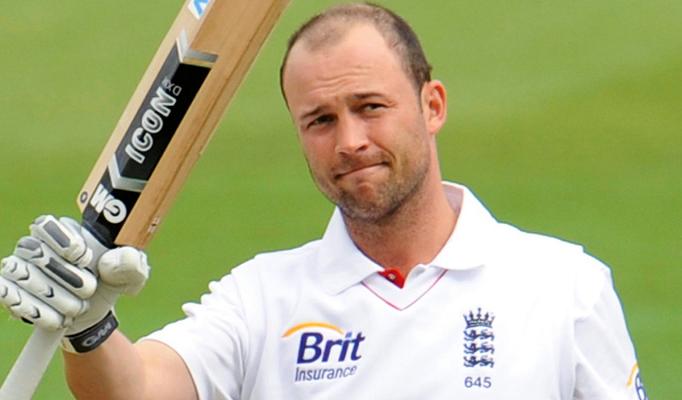
It
was Joni Mitchell who famously observed: “Don't it always seem to
go that you don't know what you've got till it's gone?” Trotty was
so often criticised during even his most
successful years. He was just another
South African import. He supposedly scored
too slowly. His mannerisms at the crease including digging his guard
as a trench were, according to some of his critics, irritating and
unnecessary.
And when he suffered problems that caused him to leave an Ashes tour
early, those critics descended on him with comments that, even if
they had been true, were unkind. The
expression “hitting a man when he's down” sprang to mind.
But
now he is gone and, wonder
of wonders, his
passing from the England scene is being mourned by everyone,
from the Barmy Army who gave him a standing ovation as he left the
crease for the last time to Alastair Cook who paid tribute to a
teammate:
“I speak on behalf of this current team and all those who have shared a dressing room with him over the years when I say it was a privilege to play alongside him. He’ll be sorely missed by all in England cricket and our supporters will thank him for some incredible memories.”
“I speak on behalf of this current team and all those who have shared a dressing room with him over the years when I say it was a privilege to play alongside him. He’ll be sorely missed by all in England cricket and our supporters will thank him for some incredible memories.”
Many
are asking what England would give now for someone capable of scoring
almost 4000 Test Match runs at an average of 44 and at a rate of just
under three runs an over plus 2800 ODI runs at an average of over 51
and at a more than decent rate of 77 runs per hundred balls. We
didn't, indeed, know what we'd got till it was gone.
There
is one other reason why I and a few others in the know will
miss Trotty on the international stage.
In the days when it was fashionable to knock Trotty at every
opportunity, his greatest defender was Kim Jones, the editor of Spin
cricket magazine. Whatever the negative comment might be, Kim could
be relied on to counter it with a carefully
researched statistic and a line of
argument that nullified the criticism. As someone qualified as both
a lawyer and an accountant, Kim was well equipped to deliver his
telling ripostes.
Sadly,
those of us who knew Kim as a good friend were devastated to learn at
the beginning of 2014 that he was terminally ill. Before his death,
we were at least able to send him messages of sympathy and support.
Jonathan Trott at this time was going through his own private hell,
having recently returned prematurely
from the Ashes tour. But, in the midst
of his own troubles, he wrote a most
moving letter to Kim. In it, amongst other supportive comments, he
promised to dedicate his tenth Test match century to Kim. Sadly,
that will now never happen. But his compassion and humanity in
writing that letter said more of the man than any achievements on
the field of play.
I'm
not sure what Joni Mitchell would have made of the new Edgbaston.
They didn't exactly pave paradise but they did knock down the quaint
old pavilion and build a stand that looks
more like a multi-storey car park than a
traditional pavilion. It does, however, provide a fantastic view of
the cricket; and it's mainly from there that I plan
to watch what I
hope will be the prolific autumn of the
career of a very special player. I
look forward to several years of Trotty taking his toll of county
attacks. There will be the rituals around
the crease, the peppering of the
mid-wicket boundary, the cannily placed singles and the occasional
sweetly timed drives. And my guess is that, at
Edgbaston and elsewhere, his entrance
onto the field will be greeted with warm applause. For we all love
someone who has fought the good fight and battled to overcome
obstacles that might have caused us lesser mortals to give up.
Wednesday, 29 April 2015
Politician Overload and How to Solve it
If,
like me, you are suffering from an
overload of politicians and
their promises, it may be
worth embarking on a visit, in your mind at least, to the
Alaskan town of Talkeetna.
It's really only a large
village, with a population
of
around 900 and
there is very little to
distinguish it from other similar remote places
in Alaska. Its main claim to
fame ended in 2009 when the annual Moose Dropping Festival erupted
into chaos and violence.
The
festival comprised a two-day celebration held each July. The
highlight was a lottery where participants would place bets on
numbered, varnished pieces of moose droppings that were tipped from
a helicopter onto a target. Sadly, according to the Anchorage Daily
News, the 2009 festival turned into a "weekend of mayhem"
with "a lot of drunken, high, stupid people doing stupid
things." Worst of all, the manager of Nagley's General Store had
his bike stolen. Mayhem, indeed. Unsurprisingly, the festival has not
been repeated since. The Daily News is silent on whether the
inhabitants are still polishing their moose turds and what they do
with them now that they can't do the obvious and drop them from a
helicopter.
So,
since 2009, there has been little
more to say about life in Talkeetna. Where,
then, are the links to our Politician overload?
That
is where Mayor Stubbs comes
in.
As
politicians go, Mayor Stubbs of Talkeetna takes some beating. He’s
celebrating over 15
years in office, has an almost 100% approval rating and has never
raised taxes at any time. Not once has he broken any promises and he is
totally untainted by scandal. There are no suggestions of financial
impropriety, no sexual
indiscretions and no
accusations of lucrative contracts being awarded to close friends and
associates. He is a clean, decent citizen who goes about his daily
tasks with a quiet dignity almost unknown in the sometimes grubby
world of politics where pride and inflated egos often flourish.
Of
course, there's
always a snag with such stories and in this case there
are a couple of extra things
you need to know. The first is
that Mayor Stubbs is actually a cat. The story is that he was
initially put forward as a joke candidate for mayor but easily beat
the two human candidates.
The
second is that, sadly,
the story isn’t true.
The
false feline tale was launched by an Alaskan TV station a
couple of years ago and
rapidly spread around the world. Headline writers couldn’t resist
references to the cat’s pyjamas; and the non-word “purrfect”
appeared many times. What everyone had missed in the original piece
were the words “as the story goes”.
Apparently,
Talkeetna doesn’t actually have a mayor and the district mayor who
covers Talkeetna is a man.

All
is not lost, however. The feline Mayor Stubbs does actually exist,
resides at the aforesaid Nagley’s General Store and is unofficially
regarded as the honorary mayor of the town, though he has never been
elected. All that has happened is that, by accident or design, Mayor
Stubbs has been turned into an international attraction and
has generated significant tourism revenues for the town.
So
the story isn’t such a catastrophe (sorry!) after all. Having
someone in office who doesn’t actually do any harm but attracts
tourists and revenue doesn’t seem like such a bad idea.
What
the whole episode maybe demonstrates is how open we are to the idea
that no political leadership is better than the bad leadership of
cynical, self-interested politicians, whatever their political
complexion. It seems that we might prefer our politicians to be not
red, blue, yellow or even green but tabby.
After
all, a couple of years ago, Belgium managed to go 541 days with no
government at all without too many negative consequences. If only the
unimaginative Belgians had thought of appointing a handsome Belgian
Shepherd dog as prime minister, they might have lived off the tourist
influx for years. And if they had launched a lottery based on
collecting his turds, polishing them and dropping them from a
helicopter, the whole Euro crisis might have been averted.
So
there you have it, Mr. Cameron and Mr Miliband. Forget the promises
that we all know that you won't keep. Find a suitably cuddly and
appealing pet, create a Turd Collection and Airdrop Quango and just
watch the deficit disappear. Just remember, however, that you
read it here first – and give due credit to Mayor Stubbs and the
good citizens of Talkeetna.
Sunday, 7 December 2014
A rose is a rose is a rose - update
More than two years ago, I wrote about the rose bush that my mother gave me.
It was a positive story about the survival of a rose bush down the years and the generations. When I wrote about it, the bush was in full bloom outside my front door.
Sadly, my optimism was mis-placed. Last winter, the rose bush, for no apparent reason, died. My brother's cutting didn't survive, neither did one I gave to my daughter. This seemed like the end of the line. I even went to the house where my mother and father used to live in Hockley Heath to see if "their" bush still survived but there was no sign of it.
My last hope was my next door neighbour, who lives mainly in France, near the Swiss border. I had given her a cutting. Sure enough, she was able to confirm that it had survived. Better still, she arrived back in Bristol last week with the cutting in a pot and has given it back to me.
My job now is to nurture it to full health and growth and then if possible to take some cuttings.
And so the story goes on Wish me green-fingered success!
It was a positive story about the survival of a rose bush down the years and the generations. When I wrote about it, the bush was in full bloom outside my front door.
Sadly, my optimism was mis-placed. Last winter, the rose bush, for no apparent reason, died. My brother's cutting didn't survive, neither did one I gave to my daughter. This seemed like the end of the line. I even went to the house where my mother and father used to live in Hockley Heath to see if "their" bush still survived but there was no sign of it.
My last hope was my next door neighbour, who lives mainly in France, near the Swiss border. I had given her a cutting. Sure enough, she was able to confirm that it had survived. Better still, she arrived back in Bristol last week with the cutting in a pot and has given it back to me.
My job now is to nurture it to full health and growth and then if possible to take some cuttings.
And so the story goes on Wish me green-fingered success!
Wednesday, 3 December 2014
The legacy of Phillip Hughes
The
death of Australian cricketer Phillip Hughes was a tragic accident
that has touched millions of people (cricketers and others) around
the world. This has been most vividly symbolised by the cricket bats put out on doorsteps and in public places by those wanting to honour
the memory of someone that most of us never really knew. He was just
a name on a scorecard or an image on a television screen.
Now
that his funeral has taken place, maybe we can begin to take stock
and reflect on the possible long-term consequences of this tragedy.
I am not thinking in particular about helmets and bouncers. No doubt
the helmet manufacturers will look at improvements that might have
prevented the fatal consequences of that blow to the neck. But there
is a trade-off between safety and mobility. Being safe from the
rarity of a blow to the neck is of little use if the batsman has
insufficient neck movement to twist and turn. As for bouncers, they
have been part of the game ever since Australian fast bowler Ernest
Jones sent a ball through W.G. Grace's beard. “Sorry, doc, she
slipped,” he is alleged to have said.
No,
my thoughts concern the whole way in which players conduct themselves
on the field. Over the last quarter of a century, it has become the
norm, in international cricket at least, for players routinely to
swear at, abuse,mock and threaten their opponents. The kind of
behaviour and language that might cause you or I to be arrested if we
indulged in it on a night out on the town has been celebrated and
praised as being evidence of a manly competitive spirit on the
cricket field. The same Australians who are now mourning Phillip
Hughes were largely responsible for initiating this approach. Steve
Waugh coined the euphemistic phrase “mental disintegration” to
describe the purpose of the behaviour. Successive captains continued
to endorse the practice by their words and their deeds. The term
sledging came into being to describe everything from the occasional
(supposedly) witty remark to the crudest personal verbal attacks.
In America, they call it trash-talking, which gets closer to
describing a set of behaviours intended to demean the receiver but
that also taints the deliverer.
How
did we get to this point? Probably because it's in our nature as
human beings. Australian psychologist Dorothy Rowe got it right in
her profoundly wise book Friendsand Enemies.
We need enemies because we can project onto them all those
attributes we find unacceptable in ourselves. Our enemy binds our
group (or team) together. The anger and aggression which might tear
our team apart we can turn on our enemy. In order to make this work
for us, we have, to a greater or lesser extent, to dehumanise the
enemy. The less that we see our enemies fully as fellow human
beings, the easier it is, on the cricket field, to humiliate and
abuse them – or, on the world stage, to kill them.
Sometimes,
events occur that change our narrow view of friends and enemies, of
“us and them”. Sadly, it often has to be a tragedy like the
death of Phillip Hughes that achieves this. Undoubtedly, within the
world of cricket in the last week, there has been, in the short term
at least, a major attitude shift, most clearly demonstrated by the
words and actions of the Australian captain, Michael Clarke. This is
the man who told tail-end England batsman James Anderson to “look
out for a ****ing broken arm” at the start of the last Ashes series
and who has, since he was appointed as Australian captain,
orchestrated, condoned and encouraged the sledging efforts of his
team.
Clarke's
response to the death of his teammate has been moving for all to
behold. He has grown in stature day by day and, in the process, has
redefined for himself and others what it means to be a real man. We
know now that it can include opening your heart for the world to see,
shedding public tears and expressing deep emotions.
In
his funeral oration, Michael Clarke said of his fallen comrade:
“His
spirit has brought us closer together..... He always wanted to bring
people together and he always wanted to celebrate his love for the
game and its people.
Is
this what we call the spirit of cricket?.....The bonds that lead to
cricketers from around the world putting their bats out, that saw
people who didn't even know Phillip lay flowers and that brought
every cricketing nation on earth to make its own heartfelt
tribute.....
This
is what makes our game the greatest game in the world.
Phillips's
spirit, which is now part of our game forever, will act as the
custodian of the sport we all love.
We
must listen to it. We must cherish it. We must learn from it. We
must dig in and get through to tea. And we must play on.”
Hard
though it must have been for Michael Clarke to stand up and say those
words, the real challenge lies ahead when deeds take over from words.
There surely must be no more threats of broken arms, no more of
James Anderson calling MS Dhoni a “f***ing
fat c***”
and no more of Dhoni threatening to “squeeze the life out of”
the England bowler.
So
here is the challenge. If we want to live out the fine words spoken
by Michael Clarke, those of us who play the game, who write about the
game, who umpire the game , who watch the game, need to re-set our
standards, to raise our sights and, in our own actions and in our
reactions to others, reject the idea that being aggressively boorish
is the best way to play the game.
Can
the world of cricket rise to the challenge? It won't be easy because
a whole macho culture has developed that will refuse to disappear
overnight. But if enough people stand up to be counted, maybe –
just maybe - a change can come to pass. This thing can be done if,
as Michael Clarke says, we listen to the spirit of the game as
expressed through the life of Phillip Hughes. We will need to take
it one step at a time. We must dig in and get through to tea. And
we must play on.
Monday, 13 October 2014
Review of the season - Warwickshire
My review of Warwickshire's season, as published by Deep Extra Cover:
See
I'm glad that they haven't edited out the very personal bits at the beginning and end about Kim Jones. I'm also pleased that my deliberate dig at Michael Vaughan has survived the sub-editor's vigilant eye.
Just a pity that George Dobell's supposed Tweet of the Season has somehow become the Twee of the Season!
See
I'm glad that they haven't edited out the very personal bits at the beginning and end about Kim Jones. I'm also pleased that my deliberate dig at Michael Vaughan has survived the sub-editor's vigilant eye.
Just a pity that George Dobell's supposed Tweet of the Season has somehow become the Twee of the Season!
Tuesday, 2 September 2014
Taking the long view
I've
had my say elsewhere about the spat that has developed between
Warwickshire
and Kent about the pricing policy that the Bears are applying for the
Royal London Cup semi-final match between the two counties this
Thursday (4 September) -see
http://deepextracover.com/2014/09/02/kent-chief-executive-gets-cross-with-bears-admission-policy/#.VAXOlrtX6zs
I've
had some additional thoughts about this. The short-term economics of
the situation are obviously important. Kent want to get the most
they can out of their 25% share of the gate receipts. Too many
freebies and their “take” may be much smaller than they would
have liked. On the other hand, Warwickshire will be hoping that
plenty of spectators will be attracted by the cheap prices and the
free offers and will not just turn up but will spend well at the food and
drinks outlets and in the Club shop.
But
there's a wider picture with a longer time horizon.
Let me
personalise it. I write as someone who has supported Warwickshire
County Cricket Club for a very long time. To be precise, I first saw
a match at Edgbaston on 6 August 1953. It was the second day of the
match between the county and the Australian touring team.
I
don't have any recollection of the admission charges for that match.
They can't have been that excessive because there were hordes of kids
there, sitting on the grass just outside the boundary. I was up in
what was then the Rea Bank stand with my mother. She had cycled
about six miles to pick me up from my grandmother's house and taken
me on three buses to get to the ground. Neither she nor my dad had
any personal interest in cricket. So she must have been indulging
her number one son's latest whim. That being so, there must have been
a price cut-off point at which my mother would have decided that she
couldn't quite afford to take me. Without going into details, we
were not wealthy. My dad made his living as a cobbler. If there was
a week when not enough people wanted their shoes repaired, we
certainly didn't starve; but we probably didn't eat so well and any
treats were out of the question.
My
point is this. What would the long-term consequences have been if
the Warwickshire authorities had upped the prices beyond what my
mother could afford? “Some other time, maybe next season” she
would have said; and I would have accepted it. But possibly, by the
following April, I would have found a new passion and my devotion to
Warwickshire cricket would have been strangled at birth.
I'm
not sure how much money Warwickshire have made out of me. I've been
a member for well over fifty years and have spent my share of money
on food and drink. Whatever the total, I have no doubts that, from
my point of view, it has been well worth it. I am also sure that
Warwickshire would have survived without me. But every time prices
are lifted, they will exclude some youngsters who have the potential,
like me, to give half a century or more of loyalty to the Club; and
every time prices go down or are maintained at a realistic level,
another few boys and girls may get their first chance to see the best
county on the best ground in the country and may become fans for
life. So the economics of these decisions go well beyond the short
term calculations of the turnstile and bar takings on the day.
Maybe
Kent's Chief Executive might wish to reflect on this.
As
for me, when I am settled down in the Press Box on Thursday, I will
glance across at what is now the Eric Hollies Stand and try to pick
out the spot where that young lad and his mum sat just over 61 years
ago. Possibly I'll see another boy or girl of a similar age; and
maybe they will be there because they have been allowed in for free.
Thursday may just be the day when they fall in love with the game of
cricket and with the Warwickshire team. I hope so; and if they do, I
can tell them that it's likely to be a lifelong passion. Believe me,
I know.
Subscribe to:
Posts (Atom)