Sunday, 18 February 2018

View from the top - county cricket's finances


I recently interviewed Norman Gascoigne, the Chairman of Warwickshire County Cricket Club.

We talked primarily about the proposed changes to the Club constitution - see my article on Deep Extra Cover:
 http://deepextracover.com/2018/02/proposed-changes-at-warwickshire-signal-a-shift-in-how-county-clubs-are-run/
Then he went on to talk about a recent analysis of Warwickshire's finances by Reabank, a poster on the Bearsfans on-line forum - see http://www.bearsfans.co.uk/showthread.php?tid=3983

This is what Norman had to say:

“I read the analysis by Reabank on Bearfans and thought it was very good.

However, all counties are operating in a complex environment and it’s not easy to get underneath the numbers. What it maybe misses is the interaction that we have to have with our stakeholders, such as the ECB and the City Council.

In 2008/9, when the global financial crisis hit, Birmingham City Council were incredibly supportive in helping to preserve Edgbaston as a Members Club, primarily as a facility for the city.
In the circumstances at the time, it would have been tempting either:
  • to sell out and get private investors to re-build the ground
  • to sell Edgbaston and find a place somewhere else (Covenrty, maybe) to build a new little stadium
We chose instead to build a partnership with the City Council and the (then) Regional Development Authority. The Council have been very supportive in enabling us to negotiate loan repayment terrms to fit in with our own cash-flow.

Many other counties are in similar situations, except that some of them have taken out short-term funding, which exposes them to what in banking terms are known as re-financing risks, which we don’t have.

So whilst the Reabank analysis is right, over the last eight years, we have had to manage our business through our cash. We can’t afford to run out of cash, which is where Durham and Northants failed. We have succeeded through strong management and cost control whilst still investing in our prime function of playing cricket.

Overall, there are questions about how the ECB are going to spend the revenue from the 2020-2024 broadcasting deal. Is it one of their aims to address the £220 million of debt that sits within the 18 first-class counties – and predominantly within the major match venue counties?
In that context, it really doesn’t matter whether we are first or 18th in the financial league table. But we’ve never had to go knocking on the door of the ECB. They have been very pleased with how we have managed the business.

Do we know what we are doing? I think we do. Are we in a worse situation than we anticipated when we agrees to re-develop? Probably we are, a little bit, because we didn’t get any Test Matches in 2013/14. That took £5 million out of our cash flow. We’ve had to live with that.

So we can’t afford to sit back and think that we are OK but we are in a much better situation than a number of our colleague counties. There would certainbly be more than four below us who are in a worse situation. We don’t have the advantages of a Middlesex playing at Lord’s or the Surrey situation but, those counties apart, we are pretty well in there in relatively good shape.”

Wednesday, 16 December 2015

Politicians' Tales (and Tails)

First it was the little town of Talkeetna in Alaska and Mayor Stubbs, the cat regarded as the unofficial mayor - see:
http://gerryshedd.blogspot.co.uk/2015/04/politician-overload-and-how-to-solve-it.html
Now Barsik the cat looks set to emulate Stubbs by being unofficially elected as Mayor of the Siberian city of Barnaul:
http://www.theguardian.com/world/2015/dec/16/disgruntled-siberian-city-wants-cat-for-mayor
It must be something to do with the cold weather in both Alaska and Siberia that makes the inhabitants want to elect someone who wears a warm fur coat.  Or maybe the citizens of those two chilly outposts are on to something.  Those in the world of healthcare are (or should be) familiar with the Latin phrase Primum non nocere. 
This roughly translates as "first do no harm" and suggests that it may be better not to do something or maybe to do nothing at all than to do something and cause more harm than good.  Google had a go at introducing a similar maxim into the commercial world with their "don't be evil" motto.  What they discovered was that if you say and write the words, you have to act accordingly.  They seem now to have watered it down with the slightly more equivocal "You can make money without doing evil." They failed to add "Don't forget to pay tax on it."
Back to the world of politics and those two mayoral cats.  Of course, it's all a whimsical fantasy. Mayor Stubbs isn't actually in charge in Talkeetna and the poll in Barnaul is just an informal social media exercise.  In the real world, we do need leaders capable, for better or worse, of making decisions.  It would just be nice to think that they would make those decisions honestly, without thought of personal gain and for the benefit of those they serve.
Maybe the attention received by Mayor Stubbs and the overwhelming support given to Barsik will at least act as a reminder to those in power, in Alaska, Siberia and elsewhere, that primum non nocere is not a bad motto.  That would be (sorry, I can't resist it) just purrfect!

Thursday, 23 July 2015

Introducing Josh Poysden

Here's my interview with Warwickshire's Josh Poysden:
http://deepextracover.com/2015/07/dec-introduces-warwickshires-josh-poysden/

Saturday, 11 July 2015

Arthur Ashe forty years on


The highlight of television coverage of Wimbledon this year was for me not the many excellent matches. It was the BBC programme ArthurAshe, More Than A Champion. It was a fitting tribute to someone who was, as the programme said, a fine tennis player and a finer human being.

For those who don't remember or are too young, Arthur Ashe was the first black American tennis player to win a Grand Slam title. Born in the Deep South of America, he lived with prejudice most of his life but conducted himself on and off the tennis court in such a manner that he achieved the status of a national and international hero in his brief lifetime. When Nelson Mandela was released from prison, Arthur Ashe was one of the first people he expressed a wish to meet.

Arthur died in 1993 at the age of 49 from the AIDS virus he had received via a blood transfusion. Before his funeral, his body lay in state in the governor's mansion in Richmond, Virginia, as 5,000 people filed past to pay their respects. The previous person to lie in state in that building had been Confederate General “Stonewall” Jackson. This was Ashe's home town where, as a boy, he had been forbidden to enter the ByrdPark tennis courts or to play against white boys. In life, he broke down barriers and since his death he has continued to do so, as Serena Williams has recently acknowledged.
And so to my own memory of Arthur Ashe. Forty years ago, he reached the Wimbledon final and was due to play Jimmy Connors. It's difficult to imagine the extent to which, for a few years, Connors total dominated the men's tennis game. Certainly, fine player that Arthur Ashe was, few gave him a chance against Connors who was in the middle of a record run of 160 weeks at the top of the world rankings and was also the reigning Wimbledon champion.

Back in 1975, the Wimbledon women's final was played on the Friday and the men's final on the Saturday – no Sunday play! And so, on that Friday evening before the final, I was in a pub in Chipping Campden in Gloucestershire, having a drink with a work colleague. The talk in the pub got round to the next day's final and everyone was unanimous that it was a foregone conclusion that Connors would win easily.

I have never, before or since, come close to experiencing anything that you might call a premonition. Logic tells me that such phenomena probably don't exist. But in that pub, I felt an overwhelming certainty that everyone was wrong and that Arthur Ashe would win. When I expressed this opinion, the pub regulars openly mocked me. Had I been a betting man, I could have gone round the pub making bets at odds of my choice, Instead, I finished my drink and went home nursing my certainty.

The next day, the feeling remained and I felt a strange detachment from the pre-final hype on radio and television. It was as if I was watching a film but had little interest because I knew the ending. In fact, I went to a cricket match in Worcester that afternoon and sat in the sunshine watching the cricket and picking up occasional snippets about the tennis as other watchers tuned in to their transistor radios. I didn't need to hear the detail, because the result was what I knew it would be – Arthur Ashe beat Jimmy Connors6-1, 6-1, 5-7, 6-4.

So that's my one and only premonition. Maybe it was just a matter of coincidence that the feeling of certainty was fulfilled. Or maybe not. Years later, I read Arthur Ashe's autobiography. In it, he wrote at length about that 1975 final and the tactics he adopted that confused and baffled Connors. And he also explained how, the evening before the final, he experienced a powerful premonition that he would win, a feeling of such certainty that it was a major factor in propelling him to his victory the next day. It was something unique that he couldn't explain rationally.


Forty years on, I am happy to remember a great man, his finest moment on the tennis court and the feeling of overwhelming certainty that we both experienced.  

Tuesday, 12 May 2015

Warwickshire v Worcestershire

 Here's my report of the final day of Warwickshire's win against Worcestershire:


Tuesday, 5 May 2015

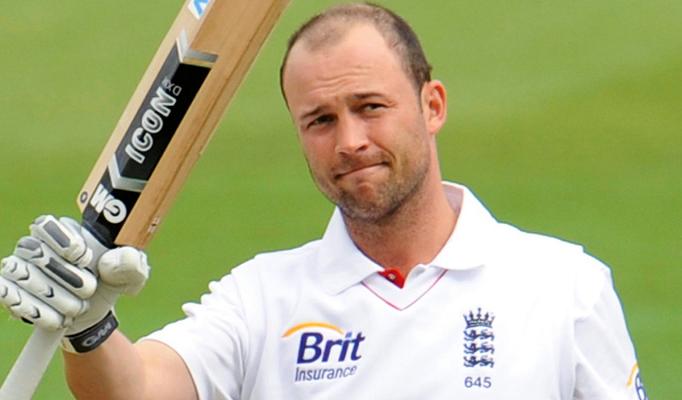
Reflection on Jonathan Trott


The retirement of Jonathan Trott from international cricket has come as no surprise. His performances for England in the three Test Matches against West Indies would have left the selectors with little alternative but to drop him from the team. He could be said, therefore, to have jumped before he was pushed; and at age 34, there is little likelihood of another comeback. For sure, Wilfred Rhodes was recalled against Australia at the age of 49 and spun England to a famous Ashes triumph. But that was in 1926 and the cricketing world, for better or worse, has moved on since then.

It was Joni Mitchell who famously observed: “Don't it always seem to go that you don't know what you've got till it's gone?” Trotty was so often criticised during even his most successful years. He was just another South African import. He supposedly scored too slowly. His mannerisms at the crease including digging his guard as a trench were, according to some of his critics, irritating and unnecessary. And when he suffered problems that caused him to leave an Ashes tour early, those critics descended on him with comments that, even if they had been true, were unkind. The expression “hitting a man when he's down” sprang to mind.

But now he is gone and, wonder of wonders, his passing from the England scene is being mourned by everyone, from the Barmy Army who gave him a standing ovation as he left the crease for the last time to Alastair Cook who paid tribute to a teammate:
“I speak on behalf of this current team and all those who have shared a dressing room with him over the years when I say it was a privilege to play alongside him. He’ll be sorely missed by all in England cricket and our supporters will thank him for some incredible memories.”

Many are asking what England would give now for someone capable of scoring almost 4000 Test Match runs at an average of 44 and at a rate of just under three runs an over plus 2800 ODI runs at an average of over 51 and at a more than decent rate of 77 runs per hundred balls. We didn't, indeed, know what we'd got till it was gone.

There is one other reason why I and a few others in the know will miss Trotty on the international stage. In the days when it was fashionable to knock Trotty at every opportunity, his greatest defender was Kim Jones, the editor of Spin cricket magazine. Whatever the negative comment might be, Kim could be relied on to counter it with a carefully researched statistic and a line of argument that nullified the criticism. As someone qualified as both a lawyer and an accountant, Kim was well equipped to deliver his telling ripostes.

Sadly, those of us who knew Kim as a good friend were devastated to learn at the beginning of 2014 that he was terminally ill. Before his death, we were at least able to send him messages of sympathy and support. Jonathan Trott at this time was going through his own private hell, having recently returned prematurely from the Ashes tour. But, in the midst of his own troubles, he wrote a most moving letter to Kim. In it, amongst other supportive comments, he promised to dedicate his tenth Test match century to Kim. Sadly, that will now never happen. But his compassion and humanity in writing that letter said more of the man than any achievements on the field of play.

I'm not sure what Joni Mitchell would have made of the new Edgbaston. They didn't exactly pave paradise but they did knock down the quaint old pavilion and build a stand that looks more like a multi-storey car park than a traditional pavilion. It does, however, provide a fantastic view of the cricket; and it's mainly from there that I plan to watch what I hope will be the prolific autumn of the career of a very special player. I look forward to several years of Trotty taking his toll of county attacks. There will be the rituals around the crease, the peppering of the mid-wicket boundary, the cannily placed singles and the occasional sweetly timed drives. And my guess is that, at Edgbaston and elsewhere, his entrance onto the field will be greeted with warm applause. For we all love someone who has fought the good fight and battled to overcome obstacles that might have caused us lesser mortals to give up.


Wednesday, 29 April 2015

Politician Overload and How to Solve it


If, like me, you are suffering from an overload of politicians and their promises, it may be worth embarking on a visit, in your mind at least, to the Alaskan town of Talkeetna. It's really only a large village, with a population of around 900 and there is very little to distinguish it from other similar remote places in Alaska. Its main claim to fame ended in 2009 when the annual Moose Dropping Festival erupted into chaos and violence.
The festival comprised a two-day celebration held each July. The highlight was a lottery where participants would place bets on numbered, varnished pieces of moose droppings that were tipped from a helicopter onto a target. Sadly, according to the Anchorage Daily News, the 2009 festival turned into a "weekend of mayhem" with "a lot of drunken, high, stupid people doing stupid things." Worst of all, the manager of Nagley's General Store had his bike stolen. Mayhem, indeed. Unsurprisingly, the festival has not been repeated since. The Daily News is silent on whether the inhabitants are still polishing their moose turds and what they do with them now that they can't do the obvious and drop them from a helicopter.
So, since 2009, there has been little more to say about life in Talkeetna. Where, then, are the links to our Politician overload?
That is where Mayor Stubbs comes in.
As politicians go, Mayor Stubbs of Talkeetna takes some beating. He’s celebrating over 15 years in office, has an almost 100% approval rating and has never raised taxes at any time. Not once has he broken any promises and he is totally untainted by scandal. There are no suggestions of financial impropriety, no sexual indiscretions and no accusations of lucrative contracts being awarded to close friends and associates. He is a clean, decent citizen who goes about his daily tasks with a quiet dignity almost unknown in the sometimes grubby world of politics where pride and inflated egos often flourish.
Of course, there's always a snag with such stories and in this case there are a couple of extra things you need to know. The first is that Mayor Stubbs is actually a cat. The story is that he was initially put forward as a joke candidate for mayor but easily beat the two human candidates.
The second is that, sadly, the story isn’t true.
The false feline tale was launched by an Alaskan TV station a couple of years ago and rapidly spread around the world. Headline writers couldn’t resist references to the cat’s pyjamas; and the non-word “purrfect” appeared many times. What everyone had missed in the original piece were the words “as the story goes”.
Apparently, Talkeetna doesn’t actually have a mayor and the district mayor who covers Talkeetna is a man.
All is not lost, however. The feline Mayor Stubbs does actually exist, resides at the aforesaid Nagley’s General Store and is unofficially regarded as the honorary mayor of the town, though he has never been elected. All that has happened is that, by accident or design, Mayor Stubbs has been turned into an international attraction and has generated significant tourism revenues for the town.
So the story isn’t such a catastrophe (sorry!) after all. Having someone in office who doesn’t actually do any harm but attracts tourists and revenue doesn’t seem like such a bad idea.
What the whole episode maybe demonstrates is how open we are to the idea that no political leadership is better than the bad leadership of cynical, self-interested politicians, whatever their political complexion. It seems that we might prefer our politicians to be not red, blue, yellow or even green but tabby.
After all, a couple of years ago, Belgium managed to go 541 days with no government at all without too many negative consequences. If only the unimaginative Belgians had thought of appointing a handsome Belgian Shepherd dog as prime minister, they might have lived off the tourist influx for years. And if they had launched a lottery based on collecting his turds, polishing them and dropping them from a helicopter, the whole Euro crisis might have been averted.
So there you have it, Mr. Cameron and Mr Miliband. Forget the promises that we all know that you won't keep. Find a suitably cuddly and appealing pet, create a Turd Collection and Airdrop Quango and just watch the deficit disappear. Just remember, however, that you read it here first – and give due credit to Mayor Stubbs and the good citizens of Talkeetna.

Sunday, 7 December 2014

A rose is a rose is a rose - update

More than two years ago, I wrote about the rose bush that my mother gave me.
It was a positive story about the survival of a rose bush down the years and the generations.  When I wrote about it, the bush was in full bloom outside my front door.
Sadly, my optimism was mis-placed.   Last winter, the rose bush, for no apparent reason, died.  My brother's cutting didn't survive, neither did one I gave to my daughter.  This seemed like the end of the line.  I even went to the house where my mother and father used to live in Hockley Heath to see if "their" bush still survived but there was no sign of it.
My last hope was my next door neighbour, who lives mainly in France, near the Swiss border.  I had given her a cutting.  Sure enough, she was able to confirm that it  had survived.  Better still, she arrived back in Bristol last week with the cutting in a pot and has given it back to me.
My job now is to nurture it to full health and growth and then if possible to take some cuttings.
And so the story goes on  Wish me green-fingered success!

Wednesday, 3 December 2014

The legacy of Phillip Hughes


The death of Australian cricketer Phillip Hughes was a tragic accident that has touched millions of people (cricketers and others) around the world. This has been most vividly symbolised by the cricket bats put out on doorsteps and in public places by those wanting to honour the memory of someone that most of us never really knew. He was just a name on a scorecard or an image on a television screen.

Now that his funeral has taken place, maybe we can begin to take stock and reflect on the possible long-term consequences of this tragedy. I am not thinking in particular about helmets and bouncers. No doubt the helmet manufacturers will look at improvements that might have prevented the fatal consequences of that blow to the neck. But there is a trade-off between safety and mobility. Being safe from the rarity of a blow to the neck is of little use if the batsman has insufficient neck movement to twist and turn. As for bouncers, they have been part of the game ever since Australian fast bowler Ernest Jones sent a ball through W.G. Grace's beard. “Sorry, doc, she slipped,” he is alleged to have said.

No, my thoughts concern the whole way in which players conduct themselves on the field. Over the last quarter of a century, it has become the norm, in international cricket at least, for players routinely to swear at, abuse,mock and threaten their opponents. The kind of behaviour and language that might cause you or I to be arrested if we indulged in it on a night out on the town has been celebrated and praised as being evidence of a manly competitive spirit on the cricket field. The same Australians who are now mourning Phillip Hughes were largely responsible for initiating this approach. Steve Waugh coined the euphemistic phrase “mental disintegration” to describe the purpose of the behaviour. Successive captains continued to endorse the practice by their words and their deeds. The term sledging came into being to describe everything from the occasional (supposedly) witty remark to the crudest personal verbal attacks. In America, they call it trash-talking, which gets closer to describing a set of behaviours intended to demean the receiver but that also taints the deliverer.

How did we get to this point? Probably because it's in our nature as human beings. Australian psychologist Dorothy Rowe got it right in her profoundly wise book Friendsand Enemies. We need enemies because we can project onto them all those attributes we find unacceptable in ourselves. Our enemy binds our group (or team) together. The anger and aggression which might tear our team apart we can turn on our enemy. In order to make this work for us, we have, to a greater or lesser extent, to dehumanise the enemy. The less that we see our enemies fully as fellow human beings, the easier it is, on the cricket field, to humiliate and abuse them – or, on the world stage, to kill them.

Sometimes, events occur that change our narrow view of friends and enemies, of “us and them”. Sadly, it often has to be a tragedy like the death of Phillip Hughes that achieves this. Undoubtedly, within the world of cricket in the last week, there has been, in the short term at least, a major attitude shift, most clearly demonstrated by the words and actions of the Australian captain, Michael Clarke. This is the man who told tail-end England batsman James Anderson to “look out for a ****ing broken arm” at the start of the last Ashes series and who has, since he was appointed as Australian captain, orchestrated, condoned and encouraged the sledging efforts of his team.

Clarke's response to the death of his teammate has been moving for all to behold. He has grown in stature day by day and, in the process, has redefined for himself and others what it means to be a real man. We know now that it can include opening your heart for the world to see, shedding public tears and expressing deep emotions.

In his funeral oration, Michael Clarke said of his fallen comrade:
His spirit has brought us closer together..... He always wanted to bring people together and he always wanted to celebrate his love for the game and its people.
Is this what we call the spirit of cricket?.....The bonds that lead to cricketers from around the world putting their bats out, that saw people who didn't even know Phillip lay flowers and that brought every cricketing nation on earth to make its own heartfelt tribute.....
This is what makes our game the greatest game in the world.
Phillips's spirit, which is now part of our game forever, will act as the custodian of the sport we all love.
We must listen to it. We must cherish it. We must learn from it. We must dig in and get through to tea. And we must play on.”

Hard though it must have been for Michael Clarke to stand up and say those words, the real challenge lies ahead when deeds take over from words. There surely must be no more threats of broken arms, no more of James Anderson calling MS Dhoni a “f***ing fat c***” and no more of Dhoni threatening to “squeeze the life out of” the England bowler.

So here is the challenge. If we want to live out the fine words spoken by Michael Clarke, those of us who play the game, who write about the game, who umpire the game , who watch the game, need to re-set our standards, to raise our sights and, in our own actions and in our reactions to others, reject the idea that being aggressively boorish is the best way to play the game.

Can the world of cricket rise to the challenge? It won't be easy because a whole macho culture has developed that will refuse to disappear overnight. But if enough people stand up to be counted, maybe – just maybe - a change can come to pass. This thing can be done if, as Michael Clarke says, we listen to the spirit of the game as expressed through the life of Phillip Hughes. We will need to take it one step at a time. We must dig in and get through to tea. And we must play on.


Monday, 13 October 2014

Review of the season - Warwickshire

My review of Warwickshire's season, as published by Deep Extra Cover:
See
I'm glad that they haven't edited out the very personal bits at the beginning and end about Kim Jones.  I'm also pleased that my deliberate dig at Michael Vaughan has survived the sub-editor's vigilant eye.
Just a pity that George Dobell's supposed Tweet of the Season has somehow become the Twee of the Season!

Tuesday, 2 September 2014

Taking the long view


I've had my say elsewhere about the spat that has developed between Warwickshire and Kent about the pricing policy that the Bears are applying for the Royal London Cup semi-final match between the two counties this Thursday (4 September) -see http://deepextracover.com/2014/09/02/kent-chief-executive-gets-cross-with-bears-admission-policy/#.VAXOlrtX6zs

I've had some additional thoughts about this. The short-term economics of the situation are obviously important. Kent want to get the most they can out of their 25% share of the gate receipts. Too many freebies and their “take” may be much smaller than they would have liked. On the other hand, Warwickshire will be hoping that plenty of spectators will be attracted by the cheap prices and the free offers and will not just turn up but will spend well at the food and drinks outlets and in the Club shop.

But there's a wider picture with a longer time horizon. 

Let me personalise it. I write as someone who has supported Warwickshire County Cricket Club for a very long time. To be precise, I first saw a match at Edgbaston on 6 August 1953. It was the second day of the match between the county and the Australian touring team.

I don't have any recollection of the admission charges for that match. They can't have been that excessive because there were hordes of kids there, sitting on the grass just outside the boundary. I was up in what was then the Rea Bank stand with my mother. She had cycled about six miles to pick me up from my grandmother's house and taken me on three buses to get to the ground. Neither she nor my dad had any personal interest in cricket. So she must have been indulging her number one son's latest whim. That being so, there must have been a price cut-off point at which my mother would have decided that she couldn't quite afford to take me. Without going into details, we were not wealthy. My dad made his living as a cobbler. If there was a week when not enough people wanted their shoes repaired, we certainly didn't starve; but we probably didn't eat so well and any treats were out of the question.

My point is this. What would the long-term consequences have been if the Warwickshire authorities had upped the prices beyond what my mother could afford? “Some other time, maybe next season” she would have said; and I would have accepted it. But possibly, by the following April, I would have found a new passion and my devotion to Warwickshire cricket would have been strangled at birth.

I'm not sure how much money Warwickshire have made out of me. I've been a member for well over fifty years and have spent my share of money on food and drink. Whatever the total, I have no doubts that, from my point of view, it has been well worth it. I am also sure that Warwickshire would have survived without me. But every time prices are lifted, they will exclude some youngsters who have the potential, like me, to give half a century or more of loyalty to the Club; and every time prices go down or are maintained at a realistic level, another few boys and girls may get their first chance to see the best county on the best ground in the country and may become fans for life. So the economics of these decisions go well beyond the short term calculations of the turnstile and bar takings on the day.

Maybe Kent's Chief Executive might wish to reflect on this.

As for me, when I am settled down in the Press Box on Thursday, I will glance across at what is now the Eric Hollies Stand and try to pick out the spot where that young lad and his mum sat just over 61 years ago. Possibly I'll see another boy or girl of a similar age; and maybe they will be there because they have been allowed in for free. Thursday may just be the day when they fall in love with the game of cricket and with the Warwickshire team. I hope so; and if they do, I can tell them that it's likely to be a lifelong passion. Believe me, I know.

Thursday, 21 August 2014

Finals Day Preview - Birmingham Bears

Here is my preview of the Birmingham Bears' appearance in the NatWest T20 Blast Finals at Edgbaston.
http://deepextracover.com/2014/08/20/finals-day-preview-birmingham-bears/#.U_XDFrtX6zt
I'll be there for what should be an exciting day's cricket.

Thursday, 27 March 2014

Launching the Birmingham Bears

I was lucky enough to be invited to Edgbaston last night for the launch of the Birmingham Bears.  Here is the article I posted on Deep Extra Cover:
http://deepextracover.com/2014/03/27/its-what-fridays-are-for-birmingham-bears-officially-launched/#.UzR3anSPOUk
Don't worry - Jonathan Trott hasn't aged badly.  That's me sat in front of his shirt in the Changing Room.  Only the hairline is similar.

Wednesday, 12 February 2014

Kim Jones, 1954 - 2014


Kim Jones was one of the nicest people I never met.  Several times, we came agonisingly close to meeting.  We were sometimes at the same cricket match on different days or even on the same day but at different ends of the ground.

I knew him mainly through Bearsfans, the on-line discussion forum for supporters of Warwickshire County Cricket Club.  He set up the forum and also was the leading light behind Spin cricket magazine, which he owned.  His articles for Spin and his Bearsfans postings all brimmed with his unique blend of wit and wisdom.

Few of us who knew him in recent times were aware of his unique and varied history – his childhood in Africa where he had a baby crocodile as a pet, his successful academic career at Shrewsbury School and at Oxford, his qualifications in both law and accountancy (not always a guarantee of either wit or wisdom) and his work in the world of advertising including running successful agencies both here and in the States.

What we did come to know was that he was a caring man of immense kindness.  When I had some problems with personal issues on-line, he helped to resolve the situation behind the scenes.  When my daughter was the victim of some unfair and untrue comments, he did the same.  He also gave her valuable opportunities to cut her journalistic teeth with Spin.

For me and for others, it was a dreadful start to the New Year when we heard that Kim was terminally ill.  Fortunately, many of us were able to send him messages of goodwill so that he was aware, in the short time before his passing, of the deep affection in which he was held by so many people.  A handwritten letter from Warwickshire and England’s Jonathan Trott probably took pride of place because, whenever anyone wrote something critical of Trotty, you could be sure that Kim would leap to his defence, often with irrefutable statistics to back up his argument.  Warwickshire captain Jim Troughton phoned him to offer his support and sympathy.

Similar tributes flowed out at his funeral on 10 February at Wrexham Crematorium and at the appropriately titled Big Bash Cricket Tea at Sweeney Hall in Oswestry.  The same words were used over and over again, in both the written and the spoken tributes.  He was kind, generous, knowledgeable, intelligent, modest, unassuming.  He made people laugh and they felt privileged to have known someone who was both a gentleman and a gentle man.

His wife and his sister both spoke movingly of their deep love for Kim.  George Dobell, a good friend over many years, also gave a heartfelt tribute.  At Kim’s request, George wore a jacket that had once belonged to the lead singer of Showaddywaddy.  Greater love hath no man for his friend than to be willing to stand up in front of so many people in such a monstrosity of a garment!

Unusually for a funeral, all three of these tributes evoked rounds of applause that seemed entirely fitting.  There was so much of Kim everywhere in that room, all his very special qualities that were being celebrated, that it seemed irrelevant to me that in front of us was a coffin that was eventually consigned to the flames.  That wooden box may have contained his mortal remains but Kim was all around us and, most especially, in our hearts.

Here is the lovely poem by Michael Laskey that is so appropriate that it might have been specially written for Kim:

I shall play cricket in heaven
in return for the afternoons
gladly given to the other
pleasure of others' leisure.

I shall walk, without haste, to the wicket
and nod to the angels kitted
in their whites waiting to discern
the kind of batspirit I am.

And one stroke in heaven, one dream
of a cover drive will redeem
every meeting of bat
and ball I've done without.

And I'll bowl too, come on to bowl
leg-breaks with such control
of flight and slight changes of pace
that one over will efface

the faint regret I now feel.
But best of all I shall field:
alert in the heavenly deep,
beyond the boundary of sleep.

Kim Jones – may you rest in peace.

Sunday, 29 December 2013

A Christmas Truce


As we approach the centenary of the First World War, I am proud to unveil this brief extract from the unpublished memoirs of my great grandfather, Algernon Shedd.  Prior to the War, he was a gentleman farmer in the somewhat bleak Northern county of Daleshire.  He led a long an eventful life, dying in 1965 at the age of 85.  However, his greatest claim to fame is that, for ten seasons prior to the War, he was the amateur captain of Daleshire County Cricket Club, leading them to the County Championship no less than seven times.

When War broke out in 1914, almost all of that great team joined the so-called Cricketing Pals Battalion of the Royal Daleshire Regiment. By Christmas 1916, they were serving together in France under my great grandfather, by then Major Shedd.  I will let him tell the story of what happened that Christmas in his own vivid words:

“Life in the trenches on the Somme was truly hellish.  The bone-numbing cold, the degrading squalor and the all-pervading stench of unwashed bodies brought irresistibly to mind the professionals’ dressing room at Derby.  Rats the size of W.G. Grace’s ego lurked in the latrines.  Many was the time my privates were badly bitten – as, indeed, was my sergeant-major.

Imagine the men’s collective delight when they received parcels from the good old county club on Christmas day.  How they appreciated the club’s generosity in sending presents of second hand cricket kit, together with the promise that the club would deduct the cost from the professionals’ wages in the first post-war season, applying an interest rate of no more than 10 per cent per annum in the meantime. It warmed my heart to know that the true spirit of Christmas lived on in the old club back in Blighty.

The men wasted no time in putting the gifts to use.  A Christmas ceasefire being in operation, they began an impromptu cricket practice in No-Man’s-Land, which was only halted when Slogger Robson belted a full toss from our medium-pacer, Lew Brush, into the German trenches.

The plaintive cry of “Please can we have our ball back, Fritz?” was greeted with a guttural “Come and get it, Tommy!”  Only after much begging by Lew – as fly as a bluebottle and an eloquent little pleader if ever there was one – was a deal struck.  We would play a match the following day against the Germans, one innings a side, with the winner having the right to keep the precious ball.

The Daleshire professionals in the platoon viewed the match with a confidence previously reserved for matches against one of the lesser southern counties such as Somerset.  This self-belief was tempered only by the knowledge that No-Man’s-Land, a morass of mud and slimy bomb craters, was likely to prove the most inappropriate venue ever for a serious cricket match.  How could any of us possibly have envisaged Old Trafford in 1956?

I am happy to report that the match was played in the most sporting spirit.  The Huns conceded the toss to us after the sixth consecutive penny had plopped irrecoverably into the thick mud.  Our assessment was that the pitch would be thoroughly untrustworthy and highly dangerous for the side taking first use of it.  So we chose to bat, knowing that it would be even worse after tea.

We ran up – or, rather, squelched up – an impressive total of 277.  Fortunately, our Teutonic adversaries applied the same technique to bowling that they used for lobbing grenades full toss into our trenches.  As a result, the vagaries of the pitch seldom came into play. And in the field, the butter-fingered Jerries had more drops than Santa Claus on Christmas Eve.

When the enemy began their reply, a December sun the colour of a much-used jock-strap had partly dried the pitch.  It was made for our mean left-arm spinner Herb Patch.  Pushing the ball through with all the flight of a pregnant penguin, he reduced them to the brink of defeat at 33-7 before the tragic incident occurred.

A hefty Hun swung wildly at a good length ball which soared high off the edge towards the fine leg boundary.  From my place at leg slip, I set off for the catch, along with several of the other close fielders.  Nearing the short boundary, I was just about to make a dive for the ball when a loud cry of “Mine!” halted me so completely in my tracks that I pulled both hamstrings.  I fell to the ground in a heap, probably left there by one of the cavalry horses.

As the ball landed harmlessly and trickled over the boundary, I realised that the cry had come not from one of my fellow fielders claiming the catch but from a haughty, monocled German officer spectating on the boundary.  Such a partisan intervention caused the Christmas spirit of goodwill to be temporarily forgotten.

We were normally pretty tolerant of the enemy’s excesses.  It was expected that Zeppelin crews would fly behind our lines to spy on us.  We accepted that if they spotted British Tommies in haystacks with French peasant girls indulging in a little entente cordiale they would hover overhead and attempt to pour water on them.  At least, we all fervently hoped it was water.  It was one thing for the Hun to indulge in gas attacks and aerial bombardments and to post secret snipers who would take pot shots at honest Tommies’ todgers as they relieved themselves at the open air latrine.  All’s fair in love and war.  But to cheat so blatantly at cricket was a clear breach of the Geneva Convention.

Whilst I lay writhing on the ground in agony, the whole team advanced on the offending German, oblivious to his cries of protest.  Before they reached him, the awful explosion did its worst.  As he wiped spattered mud, blood and brains from his coat, the German’s only comment was: “Well, that I did not warn them they cannot say. Deadly things, mines.”

So perished the flower of Daleshire cricket.  And so I now pay my tribute to them before I am gone and they are completely forgotten.  I may have been their leader on and off the cricket field but they were my heroes and I am proud that they died heroic deaths playing the game they loved.  Who now remembers Shortarms Stidworthy, stonewaller extraordinaire and renowned as the meanest man in cricket?  Who now recalls the consummate ease with which he achieved the double in each of the last ten seasons before the war?  What an all-rounder! Every year, he clocked up at least 100 rounds of drinks not paid for and 1000 cigarettes “borrowed” but never returned.

And what of Trumper Bullivant?  He was named not after the legendary Australian batting star but in recognition of his own special ability, in his delivery stride, to startle batsmen with an unexpected anal eruption.  Maybe his descendants still recall his sterling deeds – Bullivants never forget – but to the world at large, it is as though he had never trumpeted triumphantly across Edwardian cricket fields.

I could go on.  But my emotions prevent me from writing more.  Suffice it to say that I have never forgiven myself for heeding that call.  Had I continued to go for the catch, I should, of course, have perished but those brave Daleshire lads would have survived.  How stupid, how foolish, how crassly naïve I was.  Why did I not ignore that call? For when did a Daleshire fielder ever call “Mine!” if there was a chance of someone else taking a tricky catch?

I can hardly bear, in conclusion, to tell of the ultimate tragedy.  Yet I must do so.  It was not just ten good Daleshire men and true that were lost that day.  The Germans claimed the match by default.  And I never did get our ball back.”